
 🆘 Worried about trouble abroad? Travel AI Rescue helps you on the spot — theft, illness, a lost passport, scams & more. See how it works →
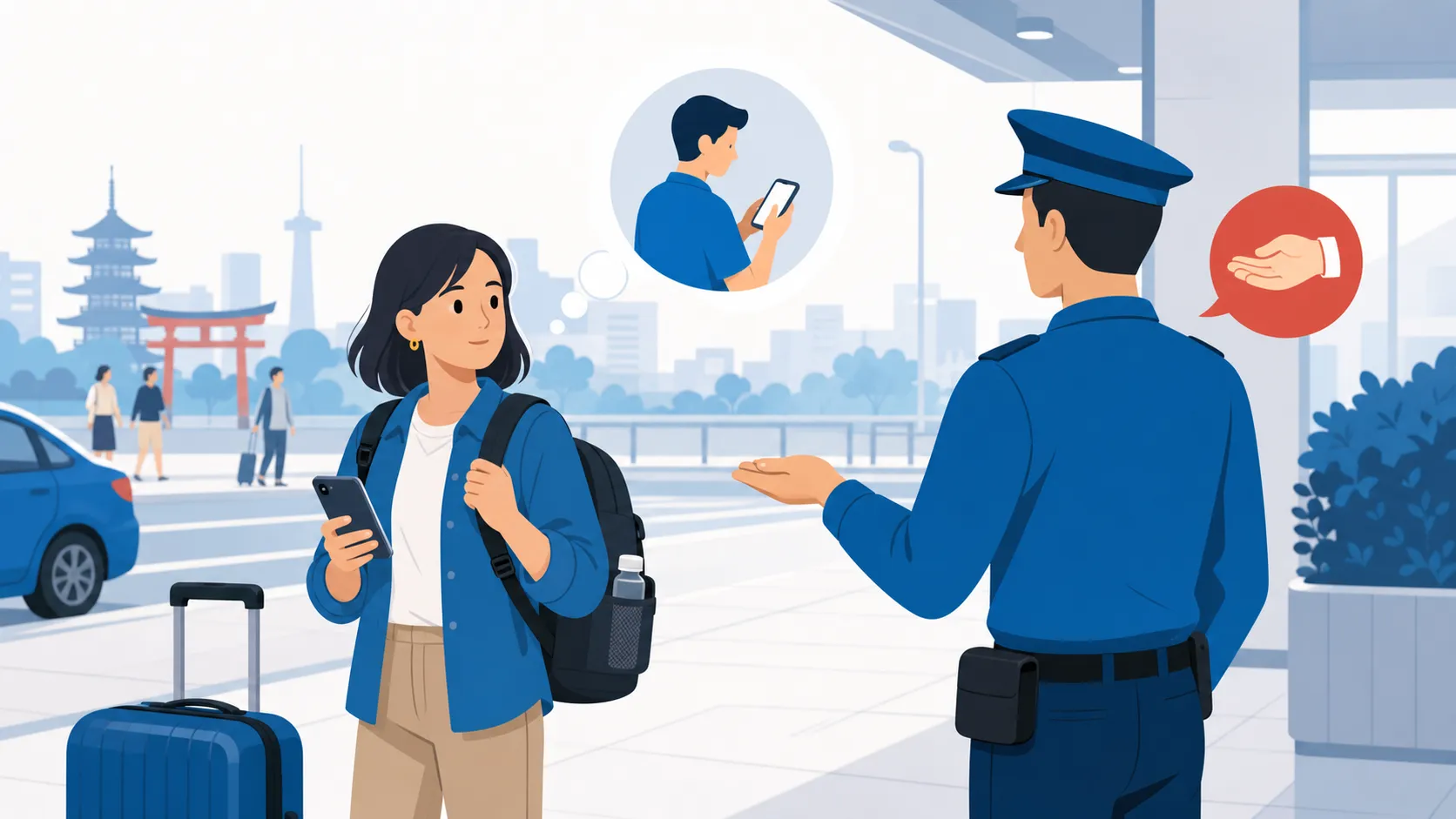
 Someone in a Uniform Wants Money Right Now — Is This Real, and Do I Have to Pay?
Short answer
A uniform or a badge alone doesn’t confirm someone is a genuine officer — impersonation scams targeting travelers exist in many places. As a rule, you can politely ask for photo identification, request to move to a well-lit public place or the nearest station, and avoid handing over your wallet or original documents for a “count” or “inspection.” But if there’s a genuine safety risk or you’re dealing with an actual officer, prioritize safety and cooperate with reasonable, lawful instructions rather than resisting or fleeing.
If this is happening right now
- Stay calm, keep your hands visible, and don’t run — comply with reasonable safety instructions even while you verify who you’re dealing with.
- Ask to see photo identification alongside any badge, and ask to move to a nearby shop, bank, or official station where you or a local can help confirm authenticity.
- If you’re pressured to pay a cash fine on the spot, handed no receipt, or asked to surrender your wallet or passport outright, ask to contact your embassy or consulate before proceeding further.
What this is
This is about distinguishing a genuine law-enforcement check from an impersonation scam, and knowing how to verify without escalating a potentially dangerous situation. This includes: someone posing as “tourist police” who stops you to inspect your wallet for “counterfeit bills,” and someone posing as an immigration officer demanding an immediate cash payment for an alleged document issue. It does not include a uniformed transit or venue security staff member checking your ticket or bag — that’s a routine access check, not a law-enforcement stop, and doesn’t call for the same verification steps.
Quick-check table
| Sign to check | Legitimate pattern | Red flag |
|---|---|---|
| Photo identification | Shown willingly alongside a badge | Only a badge shown, or reluctance to show ID |
| Badge number and agency name | Given clearly, officer comfortable repeating it | Vague, refused, or inconsistent details |
| Uniform completeness | Full, consistent uniform matching the local agency | Partial uniform, or claims of “plainclothes” with no ID |
| Marked vehicle present | Often visible nearby for an official stop | No vehicle, or an unmarked one with no explanation |
| Payment method requested | Official channels, receipts, formal process | Demands cash on the spot with no receipt |
| Willingness to go to a station | Comfortable escorting you or letting you go there | Resists or discourages moving to a public/official location |
Real vs. impersonator: what to check
Genuine officers are generally willing to show both a badge and a separate photo identification card, state their name and badge number without hesitation, and allow you to verify these details — because they know you can check. Impersonators often rely on a quickly flashed badge (which can be bought or faked far more easily than an official ID tied to personnel records), avoid giving verifiable details, and push to keep the interaction quick, informal, and cash-based.
What not to hand over
- Your full wallet or purse for an officer to “inspect for counterfeit money” or “check for drugs” — a legitimate document check does not require surrendering your entire wallet.
- Original passport or ID as a blanket handover with no explanation of why or what happens next — ask what specifically needs to be checked and keep the document in your own hands where possible.
- Cash for an unreceipted, immediate “fine” — legitimate fines in most places come with a formal process, a receipt, or a clear official payment channel, even if the exact process varies by country.
How to verify through an independent channel
- Ask for the officer’s name, badge number, and agency, and note them down (or say them aloud) — a genuine officer generally won’t object to this.
- Ask to move to a nearby public location — a shop, bank, hotel lobby, or the nearest official station — where a local staff member or additional officers can help confirm the situation.
- If safe to do so, contact your embassy or consulate, or a trusted local contact, and describe exactly what’s happening.
- If you have a working phone connection, consider calling the relevant agency’s official public number to ask whether an officer matching that description and badge number is currently on duty in that area.
Balancing verification with not obstructing a genuine officer
Verification steps should never involve fleeing, refusing all cooperation, or being physically confrontational — if the person turns out to be a genuine officer conducting a lawful check, resisting or running can create real legal and safety risk for you. The approach that balances both concerns is calm, polite, non-confrontational verification: ask reasonable questions, request a public location, and avoid handing over cash or full documents — while still cooperating with clearly lawful, safety-related instructions in the moment.
Legitimate vs. impersonation signs, side by side
| Genuine on-the-spot process (where it legitimately exists) | Impersonation scam pattern | |
|---|---|---|
| Documentation | Formal citation, receipt, or reference number | No paperwork, cash-only, no receipt |
| Verification | Officer comfortable with you confirming details | Discourages or blocks verification attempts |
| Location | Willing to conduct process at a station if requested | Insists on resolving it immediately, on the street |
| Payment | Through an official channel or clearly documented process | Immediate cash handover, often to the individual directly |
| Behavior under questioning | Calm, consistent details | Evasive, inconsistent, or pressuring |
Questions travelers ask
Are on-the-spot fines ever actually legal? In some places, yes — certain minor infractions can carry a formal, real on-the-spot process. The key differences from a scam are documentation, a clear official payment channel, and an officer who welcomes verification rather than avoiding it.
What if they already have my passport? Stay calm, ask clearly what specific check is being performed and why they need to hold it, and request that it be returned once confirmed — and involve your embassy or consulate if it isn’t returned or the situation feels wrong.
What if I already paid a cash “fine”? Keep any note of the amount, location, time, and description of the individual, and report it to local police and your embassy or consulate afterward — this also matters if you need documentation for an insurance or reimbursement discussion later.
Can I record the interaction? Rules on this vary by country, so use judgment based on the situation and local norms — in many cases, calmly stating that you’d like a colleague, contact, or your embassy informed of your location is a lower-risk way to create a record without escalating tension.
If this actually happens to you (Travel AI Rescue)
Working out in the moment whether someone is a genuine officer, and what you can safely ask for without escalating things, is exactly the kind of pressure-tested guidance this service is designed to provide.
| Free AI (ChatGPT, Gemini, etc.) | Travel AI Rescue |
|---|---|
| Can’t open it with no signal | A SIM problem is exactly when you have no signal — offline setup steps and emergency cards still work |
| You have to explain your situation every time | Already knows your plan and destination from your order — no re-explaining |
| Wrong answers in an emergency can be dangerous | SIM check uses a pre-approved decision tree; emergency numbers, embassies, and clinics come from official sources — never invented |
| No help before or after the trip | Pre-trip vault through automatic post-incident document generation (police report draft, insurance claim summary), end to end |
Included with every eSIM as standard ($7.40 if bought on its own). AI-drafted guidance, not a final medical/legal/immigration determination — contact local police, ambulance, or your embassy first in a real emergency.
Sources (checked 2026-07-20)
- PlanetWare, “The Dangerous Tourist Scam To Look Out For While Traveling Internationally”
- Timothy Dimoff, “How to Identify a Fake Police Officer or Other Law Enforcement Agent”
- Office of the Inspector General (SSA), “Federal Law Enforcement Agencies Warn of Impersonation Scam Involving Credentials and Badges”
Update trigger: Re-check this article if a major destination’s tourism authority or a national travel advisory issues specific new guidance on impersonation scams, or reported patterns shift significantly from wallet/cash-focused scams described here.
Related pages: Worldwide Travel Trouble hub · OTA, Codeshare or Separate Ticket: Who Must Help? · Travel Insurance Exists — But Are You Eligible?
🆘 Don't just read it — be ready for it.
Travel AI Rescue is an emergency travel AI for theft, illness, SIM trouble & more — auto-drafted police reports, local-language cards and an on-device valuables vault. Bundle it with your eSIM.
See how Travel AI Rescue works →