
 🆘 Worried about trouble abroad? Travel AI Rescue helps you on the spot — theft, illness, a lost passport, scams & more. See how it works →
 Do Transit Country Rules Apply to Me If I Never Leave the Airport?
Meta description: Why the country you connect through still applies its own laws and airport security rules, even on a same-terminal transit — with medicine, vape and battery examples.
Short answer
As a rule, yes — a transit country’s laws, its airport security screening, and your operating airline’s rules all still apply to you while you’re airside, even if you never pass through immigration or set foot outside the airport. The exception is a small set of “sterile transit” corridors at specific airports where you stay in a controlled zone without a formal border check, but that only affects immigration formalities, not security screening or what you’re carrying.
If this is happening right now
- If security has stopped you over an item (medicine, vape, spare battery), stay calm and be ready to show the item, its packaging, and — for medicine — a prescription or doctor’s letter if you have one, even a photo of it.
- If you’re told the item is prohibited in this country specifically (not just by your airline), ask which authority is making that determination — airport security, customs, or the airline — because the resolution path differs (security disposal vs. a customs/immigration matter).
- If there’s any suggestion this is a criminal rather than a screening matter (e.g., a controlled substance question), ask to contact your embassy’s consular section before saying anything further; this is no longer a “transit inconvenience” and deserves that level of caution.
What this is
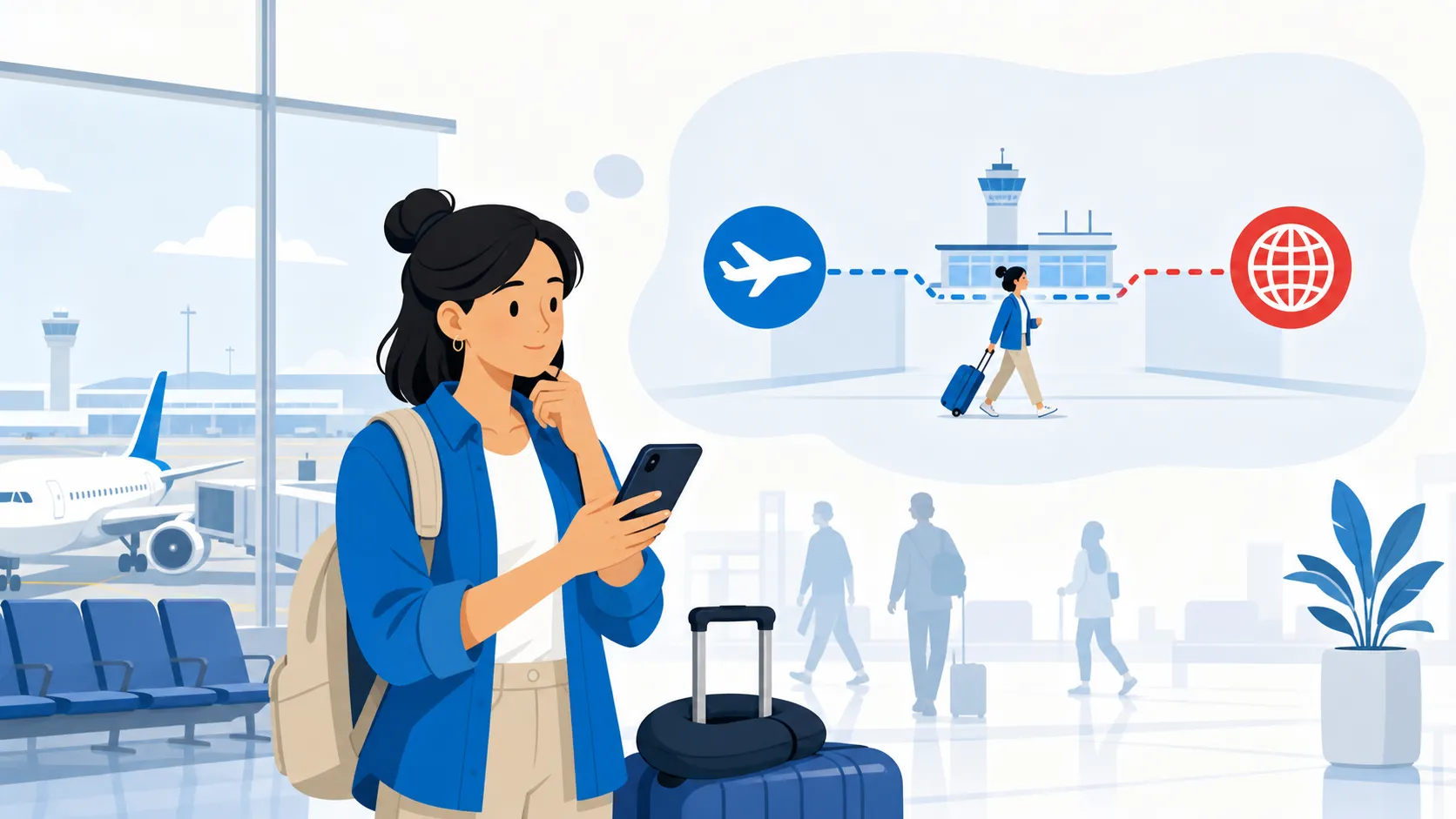
“Transit country jurisdiction” means that while you are inside a country’s airport — including secure, airside transit areas — you are still subject to that country’s laws, that airport’s security rules, and your airline’s own carriage policy, even though you may never formally enter the country via immigration.
- Examples that count: a connecting passenger’s checked medication being screened and questioned by airport security in the transit country; a spare lithium battery being confiscated at a transit-country security checkpoint under that airport’s rules.
- Counter-example — this does NOT include: immigration entry requirements like a visa to leave the airport and enter the country — those specifically don’t apply if you stay airside and meet the transit conditions (see below).
Quick-check table
| Sign | What it usually means |
|---|---|
| You stay airside, same terminal or connected terminals, no baggage reclaim | Immigration/visa rules for “entering” the country likely don’t apply, but airport security rules still do |
| You must collect baggage and re-check it | You are formally entering the country’s landside area — immigration and customs rules apply in full |
| Security asks about an item mid-connection | The transit airport’s own security rulebook is in force, independent of your origin or destination country’s rules |
| Item is legal at home and at your destination | Irrelevant on its own — the transit country’s rules (and airline’s) govern what happens at that checkpoint |
| Airline documentation restricts an item further than the country does | The airline’s rule is the binding one for that flight, even if local law is more permissive |
| You have a long layover and plan to leave the airport | You are subject to full entry requirements (visa/ETA, customs) for that country, not just transit rules |
Why “just connecting” doesn’t mean “no rules apply”
Two separate layers govern anything you carry through a transit airport:
- The transit country’s aviation security and customs rules, which apply to everyone physically inside that airport’s controlled zones, connecting or not. This is why a battery or liquid limit that’s specific to one country can still affect you on a same-terminal connection there.
- The operating airline’s own carriage policy, which can be stricter than any single country’s rule and travels with you regardless of which airport you’re in — see the airline-specific caveat throughout this hub’s power bank article.
A third, narrower layer — immigration/visa rules — is usually the one that does not apply if you remain airside in a genuine transit zone. But that exception is conditional: it depends on your nationality, the specific transit country, whether your connecting flight is on a through-ticket, and whether that airport offers a sterile transit corridor at all. Not every airport does.
| Layer | Applies during airside transit? | Applies if you exit to landside? |
|---|---|---|
| Airport security screening | Yes, always | Yes, always |
| Customs rules on prohibited/restricted goods | Yes, for anything screened or inspected | Yes, in full |
| Immigration/visa requirement to “enter” the country | Usually no, if genuine airside transit conditions are met | Yes, in full |
| Airline’s own carriage policy | Yes, regardless of country | Yes, regardless of country |
First actions if an item gets flagged in transit
- Ask which rule is being applied — airport security’s list, the destination country’s customs rules, or the airline’s own policy — since each has a different escalation and appeal path.
- For medicine, offer any documentation you’re carrying (prescription, pharmacy label, doctor’s letter) even if it’s not in the local language; a translated summary or photo of the original prescription is usually enough to start the conversation.
- For vapes and battery devices, know that many countries restrict carrying spare lithium batteries or e-cigarettes in checked luggage specifically, while allowing them in the cabin under quantity or watt-hour limits — see Power Banks on International Flights for the current baseline.
- If the item is confiscated, ask for a receipt or reference number, and note the officer’s name/badge or checkpoint ID if offered — useful if you need to dispute it or claim on travel insurance later.
Questions travelers ask
If I have a connecting flight and never see an immigration officer, can I still be fined for something in that country? Yes. Security and customs rules operate independently of immigration control. You can be inside a country’s legal jurisdiction for security/customs purposes without ever crossing its immigration desk.
Does my destination country’s rules protect me during the layover? No — the transit country’s rules govern what happens at that airport, not your final destination’s rules and not your home country’s rules.
What if my medicine is legal everywhere except the specific transit country? This does happen, and it’s one of the least predictable risks in international travel. If you know your itinerary routes through a country with unusually strict drug-control rules, checking that specific country’s customs guidance in advance is safer than assuming transit makes it irrelevant.
Are the rules different if I have a long layover and want to leave the airport for a few hours? Yes, substantially. Leaving the airport means you are entering the country under full immigration and customs rules, which typically requires whatever visa, ETA, or entry document that country requires of your nationality — the transit exception no longer applies.
Can the airline restrict something the country itself allows? Yes. Airlines can and do apply stricter carriage rules than the minimum required by any country’s law, and the airline’s rule is what determines whether you can carry or use the item on that specific flight.
If this actually happens to you (Travel AI Rescue)
A confiscated item, a confusing checkpoint conversation, or a customs question mid-layover is a stressful, time-boxed problem — Travel AI Rescue is designed to help you sort out which rule applies and what to do next, fast.
| Free AI (ChatGPT, Gemini, etc.) | Travel AI Rescue |
|---|---|
| Can’t open it with no signal | A SIM problem is exactly when you have no signal — offline setup steps and emergency cards still work |
| You have to explain your situation every time | Already knows your plan and destination from your order — no re-explaining |
| Wrong answers in an emergency can be dangerous | SIM check uses a pre-approved decision tree; emergency numbers, embassies, and clinics come from official sources — never invented |
| No help before or after the trip | Pre-trip vault through automatic post-incident document generation (police report draft, insurance claim summary), end to end |
Included with every eSIM as standard ($7.40 if bought on its own). AI-drafted guidance, not a final medical/legal/immigration determination — contact local police, ambulance, or your embassy first in a real emergency.
Sources (checked 2026-07-20)
- IATA, “Guidance to Operators – Power Banks” (OSS/Cargo, effective 31/03/2026) — iata.org
- IATA, “Passengers Travelling with Lithium Batteries” — iata.org
- ICAO, “New power bank restrictions will safeguard international aviation” — icao.int/news
- General principle drawn from standard aviation security and customs practice: transit-zone jurisdiction and sterile transit corridor conditions vary by airport and are set by each country’s border authority — check the specific transit airport’s own transfer guidance for your route.
Update trigger: re-check if you’re routing through a country known for strict controlled-substance or e-cigarette rules, or if ICAO/IATA update cabin-baggage restrictions.
Related pages: Worldwide Travel Trouble hub · Power Banks on International Flights: The 2026 Baseline · UK ETA for Visits and Airport Transit
🆘 Don't just read it — be ready for it.
Travel AI Rescue is an emergency travel AI for theft, illness, SIM trouble & more — auto-drafted police reports, local-language cards and an on-device valuables vault. Bundle it with your eSIM.
See how Travel AI Rescue works →