
 🆘 Worried about trouble abroad? Travel AI Rescue helps you on the spot — theft, illness, a lost passport, scams & more. See how it works →
 Japan and Singapore Trip: SG Arrival Card, e-Pass and Prohibited Items
Meta description: Combining Japan and Singapore on one trip? Here’s the SG Arrival Card window, e-Pass details, and Singapore’s strict vape/medicine rules.
Who this is for, and a passport disclaimer
This guide is written for a general international traveler flying between Japan and Singapore on the same trip—commonly Tokyo/Osaka to Singapore Changi, or the reverse. It assumes visa-exempt entry on both sides, which depends entirely on nationality. Japan and Singapore each maintain separate visa-exemption lists and permitted stay lengths; confirm your own passport’s status with both governments before assuming any of the process below applies to you.
Entry permission vs. arrival form for both countries
Japan: for visa-exempt nationalities, entry permission is granted on arrival. The separate arrival/customs declaration can be pre-filed through Visit Japan Web, generating a QR code that speeds up immigration and customs.
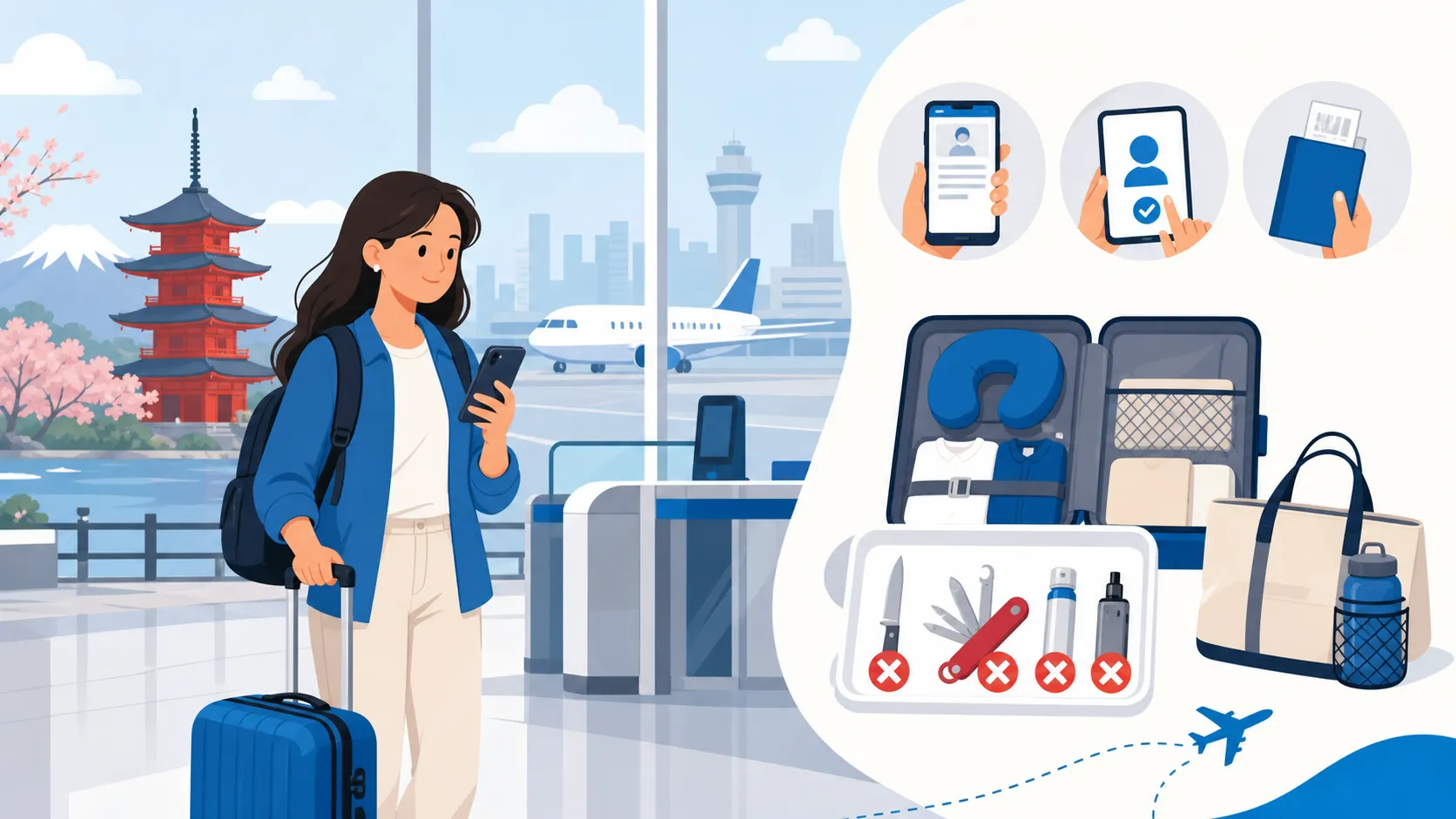
Singapore: for visa-exempt nationalities, entry permission is again granted on arrival under Singapore’s visa-exemption arrangements. Separately, nearly all foreign visitors must submit the SG Arrival Card (SGAC), a mandatory electronic pre-arrival declaration through Singapore’s Immigration & Checkpoints Authority (ICA)—it replaced the old paper “white card” disembarkation form. It is not a visa; it’s the arrival/customs declaration layer, similar in function to Japan’s Visit Japan Web but mandatory rather than optional.
On successful submission of the SGAC, you receive a confirmation email containing an electronic Visit Pass (e-Pass)—this is what replaces the physical passport stamp at Singapore immigration. Keep that email accessible on arrival; some counters and e-Channels reference it directly. Only travelers in true airside transit (no immigration clearance) and Singapore citizens/PRs/long-term pass holders entering via land checkpoints are generally exempt from the SGAC.
Filing order and windows
- Visit Japan Web (if Japan is your first leg) — no fixed earliest date; complete any time before arrival, ideally a few days ahead.
- SG Arrival Card (SGAC) — file within 3 days before arrival, including the day of arrival itself, through ICA’s official e-Service or the MyICA mobile app. It’s free. Because the window is short and firm, don’t try to file it a week out—it won’t be accepted that early, and you’ll need to remember to come back and do it closer to your Singapore arrival date.
If your route is Singapore-first-then-Japan, file the SGAC in its 3-day window before the Singapore leg, then complete Visit Japan Web before your Japan arrival on the second leg.
Through-ticket vs. separate-ticket baggage and missed connections
On a through-ticket spanning both the Japan and Singapore segments (single booking, interline or codeshare—common on this route given strong full-service carrier links between Tokyo/Osaka and Singapore), checked baggage is normally tagged straight through to your final destination without a reclaim requirement, barring a terminal change. If a covered connection is missed due to a delay attributable to the operating or marketing carrier, that airline is generally responsible for rebooking you and handling your bag.
On separate tickets, your bag is checked only to the first arrival airport, and you must collect it, clear customs, and check in fresh for the second flight. There’s no automatic rebooking protection if you miss the connection on two unrelated tickets, and any new fare or fee is your own cost unless separately insured. Japan–Singapore is served by both full-service through-fares and independent budget bookings, so confirm which kind of ticket you actually hold.
Power banks and dangerous goods by operating airline
The standard international baseline applies on both legs: lithium batteries and power banks in carry-on only, roughly 100Wh unrestricted in personal quantity, 100–160Wh requiring airline approval (commonly capped at two spares), and above 160Wh barred from passenger aircraft. Singapore Changi’s security screening is strict and consistent about enforcing carry-on-only placement.
As on the other routes in this set, the operating carrier’s specific policy—count limits, in-flight charging rules, storage requirements—can differ between the airline flying your Japan leg and the one flying your Singapore leg, even if both segments are marketed under one codeshare. Check each operating carrier’s dangerous-goods page separately rather than assuming identical rules both ways.
Payment, transit card, eSIM and 2FA changeover
Japan’s IC cards (Suica, Pasmo, ICOCA) and Singapore’s EZ-Link card (or the SimplyGo contactless payment system covering MRT, buses, and increasingly retail) are separate systems that don’t work across borders—plan on a fresh local card or its mobile-wallet equivalent when you land in each country.
Both Tokyo/Osaka and Singapore are strongly cashless-friendly cities, arguably more so than most other stops in this pilot set, with widespread contactless card and mobile payment acceptance. Still, carry a backup payment method for each leg in case one network has an issue.
A Japan-only eSIM or physical SIM stops working the moment you land in Singapore. Set up the changeover before you fly: install a Singapore-specific eSIM (or a regional plan spanning both) using Wi-Fi before or shortly after landing, since Changi has reliable free Wi-Fi to do this immediately on arrival if needed. For two-factor authentication, prefer an app-based authenticator over SMS codes tied to your home number—switching SIMs is exactly when SMS-based 2FA can fail to arrive, right when you might need to access a bank account or fix a booking.
Medication and prohibited-item differences, including vapes and e-cigarettes
Singapore has some of the strictest declaration and prohibited-item enforcement in this pilot set. E-cigarettes and vaping devices are illegal to import, possess, sell, or use in Singapore—this is stricter and more consistently enforced than in Japan, where personal-use vaping devices and heat-not-burn products are comparatively permissive. If you vape, don’t bring the device into Singapore at all; leaving it behind before the Singapore leg is the safe approach.
On medication, Japan restricts certain stimulant-containing cold and allergy products and some prescription stimulants, occasionally requiring an import certificate (Yakkan Shoumei). Singapore’s controlled-drugs regime is separately strict and specific: certain over-the-counter and prescription medications common elsewhere—including some cough suppressants, sedatives, and stimulant medications (notably certain ADHD medications)—are controlled or banned in Singapore and require prior approval from Singapore’s Health Sciences Authority (HSA) to bring in even small personal quantities. Singapore’s customs declaration requirements for medicines, and its general “when in doubt, declare” approach, are stricter than Japan’s on the outbound Japan-to-Singapore leg specifically—check the HSA’s current list for any medication you’re carrying before this trip, not just Japan’s.
Insurance, onward tickets, and emergency contacts for both legs
Confirm your travel insurance policy’s coverage explicitly names both Japan and Singapore. Both countries can ask visa-exempt arrivals for proof of onward or return travel, so keep that itinerary accessible for either leg—Singapore’s ICA has also begun issuing no-boarding directives to airlines for travelers who don’t meet entry requirements, so incomplete documentation can in some cases prevent you from even boarding the flight to Singapore, not just cause trouble on arrival.
Emergency numbers: in Japan, dial 110 for police and 119 for fire/ambulance. In Singapore, dial 999 for police and 995 for fire/ambulance. Save both sets, plus your embassy’s contact details for Tokyo (or your Japan port of entry) and Singapore, before you travel.
Official sources (checked on 2026-07-20)
| Topic | Country | Source | Checked on |
|---|---|---|---|
| Visit Japan Web (arrival/customs) | Japan | Digital Agency, Visit Japan Web official site | 2026-07-20 |
| Visa exemption / immigration | Japan | Ministry of Foreign Affairs of Japan | 2026-07-20 |
| SG Arrival Card (SGAC) and e-Pass, 3-day window | Singapore | Immigration & Checkpoints Authority (ICA) | 2026-07-20 |
| Controlled/prohibited medicines and e-cigarette ban | Singapore | Health Sciences Authority (HSA) / Singapore Customs | 2026-07-20 |
If this actually happens to you (Travel AI Rescue)
A vape confiscated at Changi or an SGAC you filed a day too early is exactly the kind of two-country snag Travel AI Rescue is built to walk you through.
| Free AI (ChatGPT, Gemini, etc.) | Travel AI Rescue |
|---|---|
| Can’t open it with no signal | A SIM problem is exactly when you have no signal — offline setup steps and emergency cards still work |
| You have to explain your situation every time | Already knows your plan and destination from your order — no re-explaining |
| Wrong answers in an emergency can be dangerous | SIM check uses a pre-approved decision tree; emergency numbers, embassies, and clinics come from official sources — never invented |
| No help before or after the trip | Pre-trip vault through automatic post-incident document generation (police report draft, insurance claim summary), end to end |
Included with every eSIM as standard ($7.40 if bought on its own). AI-drafted guidance, not a final medical/legal/immigration determination — contact local police, ambulance, or your embassy first in a real emergency.
Related pages
- Japan + Multi-Country hub — see the other four pair guides in this pilot set
- Visit Japan Web setup guide (single-country Japan article) — for a step-by-step walkthrough of the arrival QR code
Last updated: 2026-07-20 (first publication)
🆘 Don't just read it — be ready for it.
Travel AI Rescue is an emergency travel AI for theft, illness, SIM trouble & more — auto-drafted police reports, local-language cards and an on-device valuables vault. Bundle it with your eSIM.
See how Travel AI Rescue works →